There are sides to the stories of brilliant people you won´t learn in school.
Many people have heard of Mary Shelley, the writer of the book that is considered one of the first science-fiction novels in the world: Frankenstein; or, The Modern Prometheus. She was a major Romantic figure: a feminist, a liberal, and a vegetarian. Because of her influence on entire genres of literature and her pioneering convictions, I think she is the type of person history should remember among geniuses such as Einstein, Da Vinci, and Curie.
Her story is a perfect example of the way the lives of extraordinary people are full of surprising connections to other extraordinary people. You see, Frankenstein was influenced by Dr. Erasmus Darwin’s original ideas of evolution. The “original“ Darwin, mind you. Not his much more famous grandson Charles.
E. Darwin & C. Darwin
There’s a lot to unpack here. Let me start by discussing the often neglected connection between Erasmus Darwin and Charles Darwin. According to Patricia Fara, senior tutor at Clare College, Cambridge, the older Darwin, who was himself an influential physician, believed life was not created by God, but “that in the great length of time, since the earth began to exist…warm-blooded animals have arisen from one living filament.” Sound familiar?
Fara argues that E. Darwin’s theory is not too far away from the evolution theory developed by his grandson. Although now mostly forgotten, this was known to some of C. Darwin’s contemporaries, too, such as Samuel Butler, the writer of Erewhon (a book that is considered one of the first depictions of AI, coincidentally discussed in my previous blog post). Butler had a long-lasting feud with the younger Darwin. His aversion towards him is aptly contrasted with his admiration towards E. Darwin in the ending paragraph of his text “The Life of the World to Come” (available here, p. 379).
E. Darwin & Shelley
So, we have established there’s a short leap from E. Darwin to C. Darwin. But there’s also a surprisingly short leap from E. Darwin to M. Shelley. In the 1831 edition of Frankenstein (available here), Shelley mentions “Dr. Darwin” as a source of inspiration for her story. Before you ask: although not specifically stated, E. Darwin is the only plausible Darwin to be referenced at that time.
It makes sense when you think about it. E. Darwin thought life stems from matter. In other words, the creation of life is not something magical that only an omnipotent creator (such as God) can achieve. And if life truly has arisen from one living filament (although I am pretty sure modern evolutionary theories would call the likes of those filaments “protozoa”), then could life not be created, if one knew the exact mechanisms of such a process? Suddenly, we are at the heart of what Shelley’s protagonist Dr. Frankenstein managed to do.
Apart from people’s prejudice against a deviant individual, Frankenstein’s themes revolve around imagining what would happen, if someone succeeded in mimicking the natural process of life creation himself — or, to put it bluntly, in playing God. The creation of the monster in the book is the turmoil of both the creator and the created being. Darwin may have theorized about non-divine creation — and Shelley envisioned it, albeit in a most critical way.
The intellectual link between these two gifted individuals is historically true, but somehow I never heard about it in history or literature class. But without details like this, stories of brilliance get distorted subtly, but ever so significantly.
A miraculous plant in the middle of the desert
Shelley’s book was first published in 1818, rather at an interesting time in Western history. The Age of Enlightenment met its end at the beginning of the century, and new ideologies such as Kantianism, Romanticism, and Marxism were on their way. Shelley’s peer circle included her husband, poet Percy Shelley, and poet Lord Byron, who were both heavily invested in Romanticism. Erasmus Darwin, who was criticized for “encouraging religious skepticism”, was very much an archetype when it comes to the thinkers of the Age of Enlightenment. With the avant-garde Romanticist company Mary Shelley kept, it makes sense that his thoughts would be challenged in Shelley’s book. The book can be seen as a kind of turning point between these two intellectual movements.
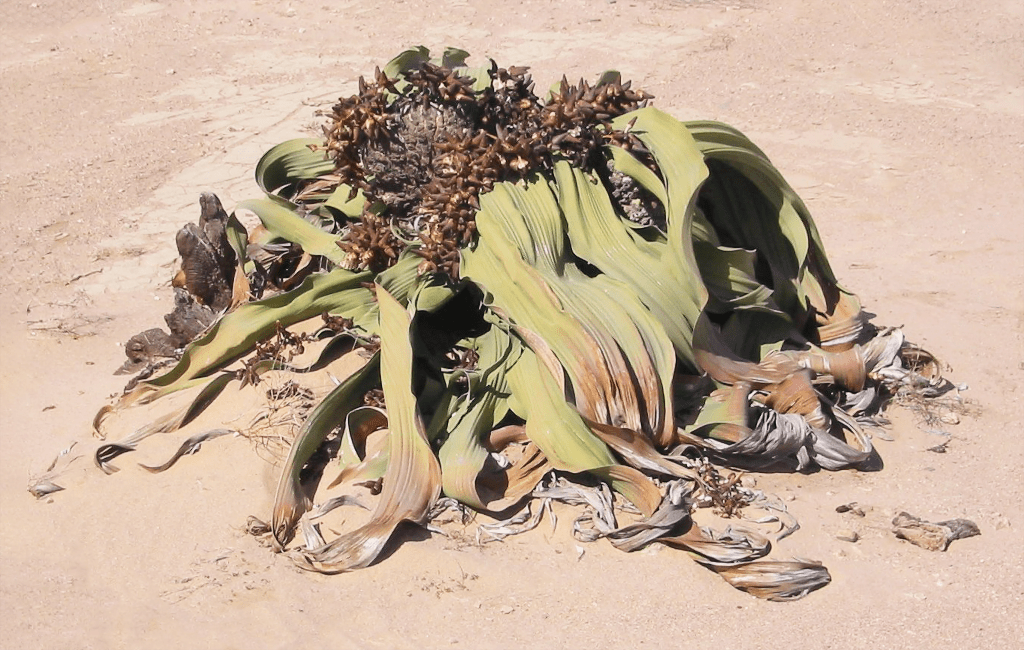
But it was not presented like that in my literature or history class. In (Finnish) history classes, you learn about individual geniuses. Einstein came out of nowhere. Picasso came out of nowhere. And one day, amazing ideas just started sprouting out of them without external stimuli— like a miraculous plant in the middle of the desert.
Here’s the thing, though: if historical narratives leave out crucial connections between people like Darwin, Darwin, and Shelley, we lose sight of how real intellectual success happens. And if you are a child like I was, reading about lonely geniuses, you might start to think it is all about being a superhuman. No matter how talented you are, you might start to believe brilliance is far beyond your reach.
A family saga of creative evolution
One of the biggest things I have learned about extraordinary people is that they are always connected to other extraordinary people. You don´t just become an artist. Your mom might be a stay-at-home mother, who secretly drew in her drawer. She never exhibited anything in a gallery, but you saw countless sketches as a child, and hence, you became an artist. That’s how it’s done. But I did not learn that in school. I learned that by looking around and stumbling upon stories, such as the origin story of Frankenstein.
I first discovered just how much the people close to you affect your intellectual evolution when I started to reflect on my family’s creative history. I come from a family of artistically talented men and women — but let’s examine the women for this essay.
My great-grandmother led a life that, from the outside, seems quite ordinary. She came from a rural town, moved to the capital of Finland as a young adult, worked as a secretary at a Lutheran institute for most of her life, and had three children. She was in good health until she was over 80, and so I had the fortune of having her as a big part of my childhood. I often go back to look at the intricate drawings she drew for me when I was little. She was not famous: she just drew those pictures to make her great-grandchild happy. But they were beautiful nevertheless.
Her daughter, my grandmother, did not become an artist, either. This is because earlier in her life, she chose to focus on her family instead of realizing her promise as a writer, much to the disappointment of the national matriculation examination committee, who saw great promise in her. I am sure her artistic inclinations had an indirect role in making my mother interested in art, eventually turning her into a visual artist, alongside her other profession as a medical doctor. I followed my mother’s creative footsteps and became a multidisciplinary artist. I also started to collaborate with my mother, and nowadays, I have a short film collective with her. We also collaborate with my brother, who is a musician.
So, you see a pattern here, don’t you? Generation by generation my family’s passion for visual creativity manifests itself in more and more concrete ways. As time passes, I see younger generations even inspire older ones to expand their creativity. I got my mother and father to start dancing in their 50s. My grandmother has started to write a book, and I am pretty sure she feels more encouraged to write it now as her daughter, my mother, is working on her own poetry collection.
My future dreams became that much brighter when I learned just how much you will be influenced by the people around you. I am surrounded by talented individuals, just like Mary Shelley was. It does not matter if not all or any of them are famous or achieved in the eyes of the world. They can still help me become something that the world will call a genius— if that is what I desire.
This article was first published on Medium on Nov 11, 2022.
This article was written using only natural stupidity. I hope you get the joke, because I do not want to farm engagement for the real keywords, if I can help it.
 Kapybara The Art Collective
Jätä kommentti